Compact watch timing machines make it easier to check a mechanical watch’s accuracy, beat error, amplitude, and overall movement performance without relying on guesswork. The models in this roundup range from straightforward No. 1000 testers to more feature-rich No. 1900 units.
Use the guide below to compare display features, pickup design, compatibility, power requirements, and practical workshop value before choosing a timegrapher for routine regulation or troubleshooting.
Best 10 Compact Watch Timing Machines Picks for 2026
Best Value Compact Timegrapher
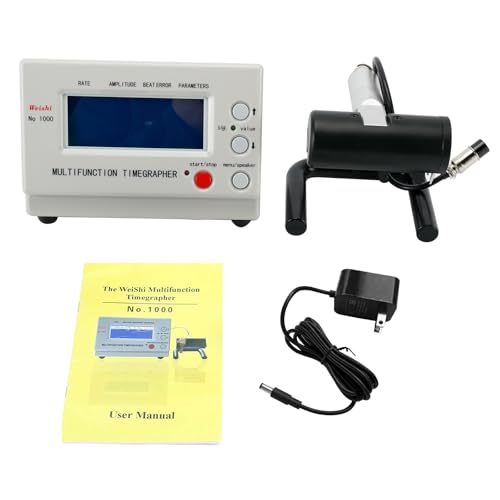
- Measures rate, amplitude, and beat error
- Six positions with 2–60 second sampling
- 110V-220V input with LCD display
Best For: Mechanical-watch collectors performing routine timing checks
Most Precise Compact Watch Timing Machine

- Stated ±0.1 s/d accuracy with 50-sample averaging
- Displays rate, amplitude, beat error, and lift angle
- Six positions and 2–60 second sampling cycles
Best For: Watchmakers and enthusiasts needing detailed mechanical-watch diagnostics
Best for Coaxial Watches

- Larger LCD than the No.1000
- Designed for mechanical and coaxial watches
- 100V-240V power with regional plug options
Best For: Users testing coaxial watches who prefer a larger display
Best Pocket-Watch Compatibility

- Listed as compatible with pocket watches
- Aftermarket design to original factory specifications
- Verify model and size before ordering
Best For: Buyers seeking a pocket-watch-compatible aftermarket option
Best Large-Screen Pick
No.1900 Watch Tester Timegrapher

- Larger LCD shows live timing data
- Supports coaxial and most mechanical watches
- Easy to use with one-year warranty
Best For: Collectors and professionals who prioritize display readability
Best Compact Professional Value
No.1000 Watch Tester Timegrapher

- Compact 6.77-inch-wide design
- Tests mechanical and coaxial watches
- Corded multifunction timing tool
Best For: Collectors and watchmakers with limited bench space
Best Automatic-Signal Pick
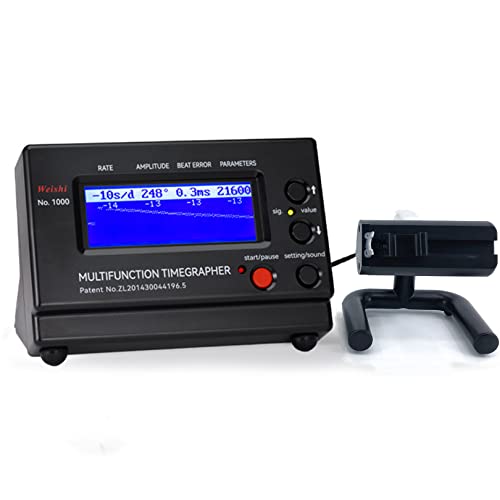
- Shows five live timing measurements
- Adjusts signal level automatically
- Supports most mechanical and coaxial watches
Best For: Collectors testing multiple mechanical watches
Best with Extra Features

- Large high-resolution color LCD
- Measures rate, amplitude, and beat error
- For mechanical watches only
Best For: Watchmakers and collectors who prioritize readable measurements
Best Data-Transfer Option
Adjustable USB/RS232 Timegrapher

- Supports waveform and timing analysis
- Transfers data to computers
- Adjustable clips fit various dial sizes
Best For: Users who want computer-based timing data review
Best Beginner Value

- Measures essential mechanical-watch timing data
- Shows graphical and numerical results
- Includes sensor, adapter, manual, and cloth
Best For: Beginners learning mechanical-watch accuracy testing
Best Value Compact Timegrapher – YaeTek No.1000 Watch Tester
For shoppers comparing compact watch timing machines for a mechanical-watch collection, the YaeTek No.1000 offers straightforward timing checks through a microphone stand and LCD display. It automatically calculates rate, amplitude, and beat error while providing adjustable sampling periods and six testing positions.
Best For: Mechanical-watch collectors who want an accessible, adjustable tester for routine timing checks.
Pros:
- Displays rate, amplitude, and beat error in real time.
- Supports six testing positions and sampling periods from 2 to 60 seconds.
- Automatically adjusts the signal level for different watches.
- Supports 110V-220V input with a US plug.
Cons:
- It is intended for mechanical watches rather than quartz models.
- The listed rate deviation range is broad, at ±999 seconds per day.
With its visual timing curves, adjustable sampling, and simple LCD interface, this YaeTek model is a practical entry point for home collectors who want more than basic visual inspection.
Most Precise Compact Watch Timing Machine – SWANSOFT No.1000 Timegrapher
The SWANSOFT No.1000 is a compact watch timing machine aimed at detailed mechanical-watch diagnostics. Its color LCD reports rate, amplitude, beat error, lift angle, and timing curves, while its 50-sample average is rated for ±0.1 seconds per day accuracy.
Best For: Watchmakers, technicians, and serious enthusiasts who need broad diagnostic measurements.
Pros:
- Offers a stated ±0.1 seconds-per-day accuracy using a 50-sample average.
- Measures amplitude, beat error, lift angle, and rate.
- Supports six positions and 2-60 second sampling cycles.
- Includes 12-month support according to the supplied notes.
Cons:
- It supports mechanical movement watches only and does not support quartz watches.
- The professional feature set may be more than casual users need.
For buyers prioritizing measurement depth, the SWANSOFT stands out with adjustable lift-angle settings, live graphs, and a wide measurement range suited to both advanced movements and problematic watches.
Best for Coaxial Watches – New Coaxial MTG No.1900
OTOOLWORLD New Coaxial MTG Watch Tester Timing Multifunction Timegrapher LCD Screen NO.1900
Check Price On AmazonIf you are comparing compact watch timing machines for standard mechanical and coaxial watches, the New Coaxial MTG No.1900 emphasizes compatibility and readability. It has a larger LCD screen than the No.1000 and is designed to provide a clearer view while testing, including on coaxial watches.
Best For: Watchmakers and collectors who want a larger display and coaxial-watch compatibility.
Pros:
- Designed to work with almost mechanical watches and coaxial watches.
- Uses a larger LCD screen than the No.1000 for easier viewing.
- Supports 100V-240V power input.
- Includes interchangeable mini plug options for several regions.
Cons:
- The supplied notes do not specify measurement accuracy or detailed measurement ranges.
- Users should confirm the included plug configuration for their country.
The No.1900 is a sensible choice when screen size and coaxial-watch performance matter more than a detailed published specification sheet. Its broad voltage range also helps suit different workbench locations.
Best Pocket-Watch Compatibility – Ewatchparts Timegrapher 1000
Ewatchparts Watch Timing Machine Multifunction Timegrapher 1000 Compatible With Pocket Watch
Check Price On AmazonAmong compact watch timing machines, the Ewatchparts Timegrapher 1000 is the option specifically identified for pocket-watch compatibility. Buyers should verify the watch model and dimensions with a ruler before ordering, since the supplied listing stresses model- and size-specific fit.
Best For: Buyers seeking an aftermarket timing-machine option compatible with pocket watches.
Pros:
- Listed as compatible with pocket watches.
- Uses an aftermarket design made to original factory specifications.
- The compact listing dimensions include a 2-inch item length.
Cons:
- The supplied notes do not provide timing accuracy, display, sampling, or measurement specifications.
- Compatibility must be checked carefully before purchase.
- The listing identifies it as aftermarket/generic rather than an original factory product.
This model is best considered when pocket-watch compatibility is the primary requirement. Because technical performance details are limited in the supplied information, confirm fit and intended use before choosing it over a more fully specified timegrapher.
Best Large-Screen Pick – No.1900 Watch Tester Timegrapher
If you want compact watch timing machines with an easier-to-read display, the No.1900 combines a larger LCD screen with multifunction testing for mechanical watches. It shows live rate, amplitude, beat error, beat, and lift angle readings, making it useful for both hobbyist checks and professional calibration work.
Best For: Watch collectors, hobbyists, and professionals who want a straightforward tester with a larger display and coaxial-watch compatibility.
Pros:
- Larger LCD screen displays multiple live timing measurements.
- Works with almost all mechanical watches, including coaxial watches.
- Designed to be easy to use right out of the box.
- Includes a one-year limited warranty and customer support.
Cons:
- Uses AC power, so it is not intended for cordless operation.
- Its stainless-steel case and larger screen may be more than casual users need.
The No.1900 is a practical choice when display readability matters. Its broad measurement set and coaxial support make it a flexible addition to a watch-testing workspace.
Best Compact Professional Value – No.1000 Watch Tester Timegrapher
The No.1000 is a compact watch timing machine for measuring beats per unit time in mechanical watches. Its small 6.77-by-1.57-by-4.49-inch design suits a dedicated bench or hobby workspace, while its multifunction format is intended for both watch collectors and professional watchmakers.
Best For: Buyers seeking a compact, corded timegrapher for mechanical-watch testing and coaxial-watch use.
Pros:
- Compact dimensions make it suitable for space-conscious work areas.
- Compatible with mechanical watches and supports coaxial testing.
- Multifunction design appeals to collectors and professional watchmakers.
- CE specification compliance is listed.
Cons:
- Requires corded electric power.
- The supplied notes do not list readings such as amplitude or beat error.
The No.1000 focuses on compactness and core timing measurement. It is a sensible option for users who need a small, dedicated tester rather than a larger display-oriented model.
Best Automatic-Signal Pick – No.1000 Watch Timing Machine
KINSANINC Watch Tester Timegrapher No.1000, Watch Timing Machine Calabration for Mechanical Watches
Check Price On AmazonFor shoppers comparing compact watch timing machines, this No.1000 model offers a clear LCD readout of rate, amplitude, beat error, beat, and lift angle. It automatically adjusts the optimal signal level when switching between watches, which can make routine testing more convenient for collectors and professionals.
Best For: Mechanical-watch owners who want broad timing readouts and automatic signal adjustment, including support for coaxial watches.
Pros:
- Displays live rate, amplitude, beat error, beat, and lift angle.
- Automatically adjusts the optimal signal level for different watches.
- Works with almost all mechanical watches and coaxial watches.
- Easy to use out of the box and backed by a one-year limited warranty.
Cons:
- Uses corded electric power.
- The supplied details describe a plastic case rather than a stainless-steel case.
This version stands out for combining multiple useful readings with automatic signal adjustment. It is a strong fit for users who test several mechanical watches and want a simple setup process.
Best with Extra Features – SWANSOFT No.1900 Timegrapher
For shoppers comparing compact watch timing machines, the SWANSOFT No.1900 stands out with a larger, high-resolution color LCD and an intuitive backlit interface. It is designed for mechanical watches and displays rate, amplitude, beat error, beat, and lift angle.
Best For: Watchmakers, collectors, technicians, and hobbyists who want an easy-to-read mechanical watch tester.
Pros:
- Larger, high-resolution color screen than the No.1000
- Displays key timing measurements, including rate, amplitude, and beat error
- Includes a sensor, US adapter, and professional manual
- Backlit screen and intuitive controls support straightforward operation
Cons:
- Only suitable for mechanical movement watches
- Does not support quartz watches
- Its listed weight is 1.62 kg, so it may be less portable than smaller units
The No.1900 is a practical choice when screen visibility and broad mechanical-watch measurements matter more than minimum size. Its included accessories and one-year warranty add convenience for regular bench use.
Best Data-Transfer Option – Adjustable USB/RS232 Timegrapher
This compact watch timing machine is geared toward users who want flexible calibration features and computer connectivity. It measures daily rate, amplitude, and beat error while adding waveform analysis, adjustable settings, sliding clips, and USB/RS232 data transfer.
Best For: Technicians and advanced hobbyists who want to review timing data on a computer and accommodate different dial sizes.
Pros:
- Supports daily rate, amplitude, beat error, frequency, and waveform display
- Transfers data to tablets, laptops, and desktops
- Adjustable sliding clips help secure different dial sizes
- Power indicator light provides clear operating feedback
Cons:
- The supplied notes do not specify included accessories or warranty coverage
- Computer transfer may be more functionality than beginners need
- The notes identify it as a mechanical watch calibrator rather than a quartz tester
Choose this model if data handling and adjustable watch positioning are central to your workflow. Its compact listed dimensions and computer-transfer capability make it especially useful for organized calibration work.
Best Beginner Value – TICFROG No.1000 Timegrapher
The TICFROG No.1000 is a straightforward option among compact watch timing machines for learning the basics of mechanical-watch accuracy. It measures rate, beat rate, beat error, and amplitude, showing results graphically and numerically on its display.
Best For: Beginning watchmakers and hobbyists who need essential timing information without an overly advanced feature set.
Pros:
- Measures rate, amplitude, beat error, and beat rate
- Displays results in both graphical and numerical formats
- Automatic signal-level adjustment simplifies operation
- Includes a sensor, US adapter, manual, and watch cleaning cloth
Cons:
- Designed for mechanical watches, not quartz movements
- The No.1900 offers a larger, higher-resolution screen
- Users should consult the manual before operating the tester
The No.1000 covers the core measurements needed to assess whether a mechanical watch is gaining or losing time. It is a sensible starting point for beginners, particularly with its included accessories and stated 18-month satisfaction guarantee.
How We Picked These Compact Watch Timing Machines
We focused on compact timegraphers intended for mechanical wristwatches and, where applicable, pocket watches. The selection considers the measurements most useful for regulation—daily rate, amplitude, beat error, and beat number—along with display clarity, acoustic pickup design, operating convenience, and stated compatibility. Models from the No. 1000 and No. 1900 families are included because they represent common feature levels in this category, while branded options add useful alternatives for watchmakers and hobbyists.
Because listings can vary by seller, verify the included accessories, plug type, voltage range, and warranty before ordering. A timegrapher is a diagnostic instrument, so consistent positioning and correct movement data matter as much as the device itself.
Quick Comparison
| Feature | What to look for | Why it matters |
|---|---|---|
| Measurements | Rate, amplitude, beat error, and beat number | Provides a fuller picture of movement performance |
| Pickup | Acoustic clip or rail with stable contact | Helps capture a clean timing signal |
| Display | Readable LCD with waveform or trace information | Makes adjustment and diagnosis easier |
| Compatibility | Mechanical watches and supported beat rates | Prevents unreliable readings |
| Power | Correct voltage and regional plug | Avoids setup problems and unsafe use |
Key Buying Factors for Compact Watch Timing Machines
Measurements and Beat-Rate Support
Choose a unit that displays at least daily rate, beat error, and amplitude if you plan to regulate watches rather than simply check whether they are running. Confirm that its selectable beat-rate range supports the movements you service, including higher-frequency modern calibers when relevant.
Signal Quality and Positioning
A dependable acoustic pickup and a stable holder are essential. The watch should remain still while the sensor listens to the movement. Some machines use a rail or clip arrangement, while others rely on a separate microphone-style pickup. Either can work well when properly aligned, but loose contact may produce misleading results.
Screen and Controls
An LCD should be easy to read in your workspace and show the information you actually use. Clear controls for beat selection, lift angle, and measurement mode are more valuable than extra functions that complicate setup.
Portability and Power
Compact models are useful for small benches, classrooms, service kits, and occasional home testing. Check dimensions, included power accessories, and whether the listed 110–220V input matches your location. A compact case is helpful only if the pickup and cables can also be stored conveniently.
Who Should Buy Which Compact Watch Timing Machines?
For beginners and occasional users: A straightforward No. 1000-style timegrapher is usually the sensible starting point. Prioritize readable results, simple controls, and a complete pickup setup.
For hobbyists regulating several watches: Choose a model with clear rate, amplitude, and beat-error readings, dependable positioning, and support for the beat rates found in your collection.
For watchmakers and repair benches: A No. 1900-style unit or another feature-rich tester may be preferable when waveform information, broader adjustment controls, and repeated measurements are important.
For pocket-watch owners: Confirm that the holder and pickup can accommodate the watch’s size and case design. Compatibility claims should be checked carefully before purchase.
Whichever model you choose, take readings in multiple positions, allow the movement to settle, and compare results over time. A timegrapher supports diagnosis and regulation; it does not replace proper cleaning, lubrication, or professional movement service.