Finding the best bread machines for small bakeries means balancing batch capacity, consistency, programmability, and countertop space. A dependable machine can simplify test batches, specialty loaves, and smaller production runs without requiring a full commercial oven setup.
We selected 10 models spanning compact, high-capacity, programmable, specialty-cycle, and premium options so you can match features to your bakery’s menu and workflow.
Best 10 Bread Machines for Small Bakeries Picks for 2026
Compact Everyday Pick

- 12 programs, including gluten-free and artisan dough
- Three loaf sizes up to 2 pounds
- 13-hour delay start and keep-warm function
Best For: Small operations needing compact, flexible daily baking
Fast Specialty-Bread Choice

- Specialty courses for gluten-free, vegan, and whole-wheat bread
- Dual heaters for even baking and browning
- Rapid courses finish in about 2 hours 25 minutes
Best For: Small bakeries making specialty breads on tighter schedules
Largest-Capacity Smart Option
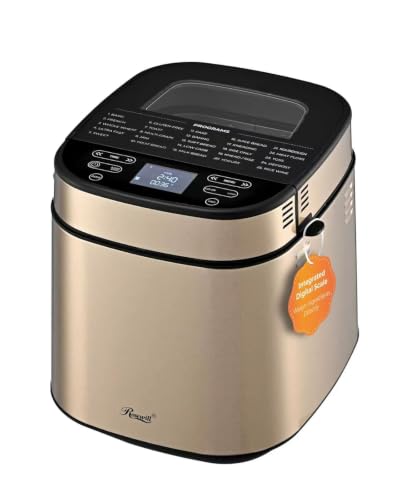
- Built-in digital scale for weight-based mixing
- 25 programs, including sourdough and gluten-free
- Makes loaves up to 2.5 pounds
Best For: Growing operations wanting automation and larger small batches
Versatile Classic
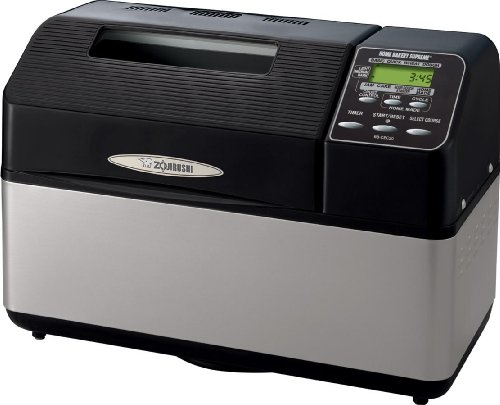
- 10 programs include cake, jam, dough, and sourdough starter
- Rectangular 2-pound loaf with adjustable crust shade
- 13-hour timer and quick-bake mode
Best For: Small bakeries wanting broad recipe versatility
Compact Production Pick
Elite Gourmet 2 Lb Bread Maker
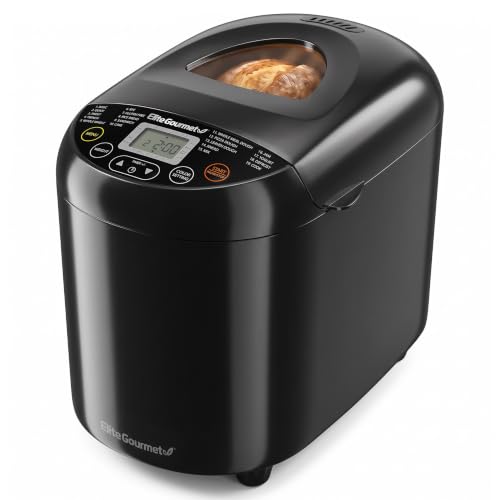
- Three loaf sizes up to 2 pounds
- 19 programs for bread, dough, cake, and jam
- 15-hour delay timer with keep-warm function
Best For: Compact kitchens and small specialty batches
Specialty Recipe Pick

- Automatic dispenser for nuts and add-ins
- Specialty courses include gluten-free and vegan
- Three memory settings for custom recipes
Best For: 1-pound specialty and dietary loaves
Custom Batch Pick
Breville Custom Loaf Bread Maker

- Loaf sizes from 1 to 2.5 pounds
- Nine custom settings plus 13 automatic programs
- Automatic fruit and nut dispenser
Best For: Recipe development and customized mix-in loaves
Compact Artisan Workhorse

- Three loaf sizes from 1 to 2 pounds
- 19 presets include bread, dough, pizza, and jam
- 15-hour delay timer with 60-minute keep-warm
Best For: Small-batch baking with straightforward automation
Recipe-Development Specialist
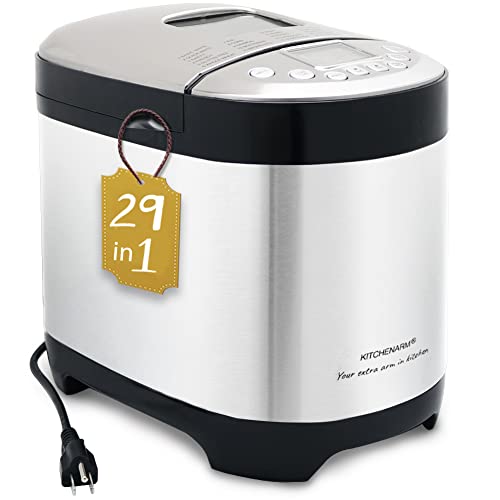
- 29 menus cover specialty breads and non-bread recipes
- Four customizable HOME MADE menus
- Three loaf sizes, crust settings, and saved controls
Best For: Custom recipes and specialty small-batch production
Quiet Everyday Batch Maker
17-in-1 Automatic Bread Machine

- 17 programs for bread, cake, jam, yogurt, and more
- Three loaf sizes with three crust settings
- 50-decibel operation, delay timer, and non-stick pan
Best For: Beginner-friendly, quiet small-batch baking
Compact Everyday Pick – Cuisinart CBK-110NAS
For small bakeries that need a straightforward countertop option, the Cuisinart CBK-110NAS is a compact bread maker for small bakeries with automatic kneading, rising, and baking. Its 12 programs, three loaf sizes, and 13-hour delay start support varied daily production without requiring an all-day scratch-baking project.
Best For: Small operations prioritizing compact size, simple controls, and flexible everyday loaves.
Pros:
- Offers 12 programs, including artisan dough, jam, cake, and gluten-free settings.
- Supports 1-, 1.5-, and 2-pound loaves with three crust shades.
- Includes a 13-hour delay start, 60-minute keep-warm function, and paddle-removal alert.
Cons:
- Its 2-pound maximum capacity may be limiting for higher-volume bakery production.
- Hand-wash care is required.
The Cuisinart is a practical fit when footprint and ease of use matter more than batch size. It gives a small bakery useful program variety and scheduling flexibility in a relatively compact machine.
Fast Specialty-Bread Choice – Zojirushi Virtuoso Plus
The Zojirushi Virtuoso Plus is a strong bread machine for small bakeries that regularly make specialty loaves or need faster turnaround. Its dual heaters promote even baking and browning, while dedicated healthy courses and rapid settings broaden its usefulness.
Best For: Small bakeries producing whole-wheat, gluten-free, vegan, or rapid white bread.
Pros:
- Provides Multigrain, whole-wheat, gluten-free, salt-free, sugar-free, and vegan settings.
- Dual heaters in the lid and bottom support even baking and browning.
- Rapid white and whole-wheat courses finish in about 2 hours and 25 minutes.
Cons:
- At 24 pounds, it is relatively heavy for a countertop appliance.
- Its capacity is limited to 2-pound loaves.
- The manufacturer warranty is one year.
With specialized courses and a rapid mode, this Zojirushi is well suited to a bakery menu that includes dietary breads or quick replenishment. Its heavier build and 2-pound capacity are trade-offs to consider when space or volume is tight.
Largest-Capacity Smart Option – Rosewill 25-in-1 Bread Maker
For small bakeries seeking more automation and a larger loaf option, the Rosewill 25-in-1 bread maker combines a built-in digital scale with 700-watt dual heating. It can weigh ingredients in the pan, run one-touch programs, and produce loaves up to 2.5 pounds.
Best For: Growing small bakeries that value repeatable weighing, broad program selection, and larger loaves.
Pros:
- Includes 25 programs, with sourdough, gluten-free, yogurt, jam, and whole-wheat options.
- Built-in scale reduces the need for separate measuring tools and bowls.
- 700-watt top-and-bottom heating supports surround baking, with three loaf sizes and a 15-hour delay timer.
Cons:
- Hand-wash care is required.
- Its 2.5-pound maximum remains better suited to small batches than high-volume production.
- The listed warranty is one year.
The Rosewill stands out for workflow efficiency: weighing directly in the pan can simplify preparation and improve repeatability. Its broad preset selection and larger capacity make it one of the more versatile choices here, provided a single-machine batch size is sufficient.
Versatile Classic – Zojirushi Home Bakery Supreme
The Zojirushi Home Bakery Supreme is a versatile bread machine for small bakeries that want more than standard loaves. It supports bread, cake, meatloaf, jam, dough, and sourdough starter settings, along with a rectangular 2-pound loaf and adjustable crust shade.
Best For: Small bakeries seeking a proven multi-purpose machine for breads, doughs, and additional recipes.
Pros:
- Offers 10 programs, including cake, jam, dough, sourdough starter, meatloaf, and quick-bake modes.
- Bakes a rectangular 2-pound loaf with adjustable crust shade.
- Provides an easy-to-read LCD panel, nonstick coating, and a 13-hour timer.
Cons:
- Its 2-pound capacity may not meet higher-volume bakery needs.
- The unit weighs 19.5 pounds, which makes frequent repositioning less convenient.
- The listed warranty is one year.
This model makes sense when menu flexibility is more important than maximum throughput. Its dough, sourdough starter, and non-bread settings can help a small bakery diversify, while the rectangular loaf format offers a familiar finished shape.
Compact Production Pick – Elite Gourmet 2 Lb Bread Maker
For small bakeries needing a compact bread machine for small bakeries, the Elite Gourmet 2 Lb Automatic Bread Maker offers hands-off mixing, rising, and baking in three loaf sizes. Its 19 presets, including gluten-free, wheat, French, pizza dough, cake, and jam, provide useful menu flexibility without requiring a full-size oven.
Best For: Small bakeries or compact kitchens that need versatile, scheduled bread and dough production.
Pros:
- Supports 1 lb, 1.5 lb, and 2 lb loaf sizes.
- Includes 19 one-touch programs and three adjustable crust shades.
- Offers a 15-hour delay timer and 60-minute keep-warm function.
- Ceramic pan is dishwasher safe and the 550-watt design is compact.
Cons:
- Maximum capacity is 2 pounds, which may limit larger production runs.
- Only one bread machine is included.
This is a practical choice when space, scheduling, and recipe variety matter more than batch size. The 2-pound capacity makes it better suited to specialty loaves, smaller orders, or supplemental production than high-volume baking.
Specialty Recipe Pick – Zojirushi Home Bakery Maestro
The Zojirushi Home Bakery Maestro is a focused option among bread machines for small bakeries, especially when producing 1-pound loaves and specialty recipes. Its automatic ingredient dispenser, healthy-course settings, and programmable memory slots support repeatable customization in a compact format.
Best For: Small bakeries specializing in 1-pound loaves, dietary breads, and customized recipes.
Pros:
- Automatic dispenser adds nuts and other ingredients at the appropriate time.
- Includes multigrain, whole wheat, gluten-free, salt-free, sugar-free, and vegan courses.
- Three homemade memory settings allow custom knead, rise, and bake times.
- Also handles bread dough, pizza dough, pasta dough, cake, and jam.
Cons:
- Its 16-ounce capacity is smaller than the other listed machines.
- Offers 15 programs, fewer than the Elite Gourmet model.
- The 1-pound format may require more cycles for larger orders.
With its small capacity and strong specialty-course lineup, this model is best viewed as a precision tool rather than a high-output bakery machine. The memory settings can be particularly useful for maintaining consistent custom recipes.
Custom Batch Pick – Breville Custom Loaf Bread Maker
For small bakeries that need control over recipe development, the Breville Custom Loaf is one of the more configurable bread machines for small bakeries. It supports loaf sizes from 1 to 2.5 pounds, automatic fruit and nut dispensing, custom settings, and both automatic and manual programs.
Best For: Small bakeries developing customized loaves and producing batches with varied mix-ins or crust preferences.
Pros:
- Handles loaf sizes from 1 to 2.5 pounds.
- Provides 13 automatic programs plus nine custom settings.
- Automatically dispenses fruit, nuts, and other mix-ins.
- Includes a collapsible kneading paddle and 60 minutes of power-interruption protection.
Cons:
- Hand-wash care is required rather than dishwasher-safe maintenance.
- At 16.8 pounds, it is heavier than the Elite Gourmet model.
- Its one-year limited warranty is relatively short for ongoing business use.
The Breville stands out when recipe control and add-in timing are central to your workflow. Its 2.5-pound maximum is useful for somewhat larger loaves, though hand washing and the heavier stainless-steel build may matter in a busy production area.
Compact Artisan Workhorse – 2-Lb Programmable Bread Maker
For small bakeries testing recipes or producing limited batches, the Elite Gourmet is one of the more straightforward bread machines for small bakeries. It handles kneading, rising, and baking automatically, while supporting three loaf sizes and 19 preset programs.
Best For: Small-batch operators who want simple controls, flexible loaf sizing, and basic dough-making capability.
Pros:
- Supports 1-, 1.5-, and 2-pound loaf sizes.
- Offers 19 presets, including bread varieties, dough, pizza dough, and jam.
- Includes a 15-hour delay timer and 60-minute keep-warm function.
- Stainless-steel construction and a 550-watt motor suit routine countertop use.
Cons:
- Its 2-pound maximum capacity may be limiting for higher-volume bakery production.
- The supplied care instructions call for wiping the machine rather than describing dishwasher-safe parts.
The Elite Gourmet focuses on accessible automation rather than high-volume output. Its preset range and adjustable loaf sizes make it a practical choice for smaller production runs, especially when freeing the oven and reducing cleanup are priorities.
Recipe-Development Specialist – 29-in-1 Smart Bread Machine
The KITCHENARM stands out among bread machines for small bakeries that need recipe flexibility. Its 29 menus cover multiple bread styles and non-bread programs, while the customizable HOME MADE cycle lets you specify knead, rest, rise, and bake stages.
Best For: Small bakeries developing specialty, gluten-free, whole-grain, or custom bread recipes.
Pros:
- Provides 29 automatic menus, including gluten-free, sourdough, brioche, ciabatta, keto, cake, jam, and yogurt.
- Allows up to four personalized HOME MADE menus with adjustable cycle times and temperatures.
- Supports 1-, 1.5-, and 2-pound loaves with three crust-color settings.
- Includes add-nuts and remove-paddle alarms, power-interruption recovery, recipes, and a two-year warranty.
Cons:
- The extensive customization may require more setup than a basic preset machine.
- Hand washing is specified in the supplied care details.
This is the strongest fit for experimentation and repeatable recipe development in a small operation. Its saved settings and cycle-level control can reduce repetitive setup, while the 2-pound capacity keeps it oriented toward small batches rather than commercial-scale production.
Quiet Everyday Batch Maker – 17-in-1 Automatic Bread Machine
For small bakeries prioritizing uncomplicated operation, the BM8205 offers a practical set of bread machines for small bakeries features. It combines 17 programs, three loaf sizes, a non-stick pan, and a low-noise design rated at 50 decibels.
Best For: Beginner-friendly daily baking where quiet operation, simple cleanup, and predictable loaf sizing matter.
Pros:
- Offers 17 programs, including basic bread, whole wheat, cake, jam, yogurt, and gluten-free options.
- Bakes 1-, 1.5-, or 2-pound loaves with light, medium, or dark crust settings.
- Uses 600 watts and 360-degree heat distribution, with stated 50-decibel operation.
- Includes a 15-hour delay timer, one-hour keep-warm function, non-stick pan, and overheat protection.
Cons:
- The 2-pound maximum capacity is better suited to small batches than bakery-scale volume.
- Basic bread programs take approximately 3 hours 35 minutes to 3 hours 45 minutes depending on loaf size.
The BM8205 is a sensible option when ease of use and low noise are more important than extensive recipe programming. Its listed safety feature and easy-clean pan add convenience, but the modest capacity means a bakery may need multiple cycles for larger orders.
How We Picked the Best Bread Machines for Small Bakeries
We focused on the features that matter most in a small-bakery environment: loaf capacity, cycle flexibility, control over ingredients and timing, construction, ease of cleaning, and repeatability. Models with multiple loaf sizes or programmable settings can support changing orders, while dedicated gluten-free, custom, or specialty cycles may help bakeries serve more varied menus.
We also considered practical differences between compact home-style machines and more premium breadmakers. A countertop machine is not a replacement for commercial production equipment, but it can be useful for recipe development, staff training, limited-volume sales, and products that require a controlled, repeatable process.
Quick Comparison
| Priority | Look for | Best fit |
|---|---|---|
| Limited counter space | Compact footprint and 1–2 lb capacity | Small menus and test batches |
| Recipe variety | Many presets and custom cycles | Specialty loaves and frequent experimentation |
| Consistent production | Reliable timing, sturdy pan, and repeatable controls | Regular small-batch orders |
| Premium workflow | Advanced programming and precise operation | Established bakeries needing convenience |
Key Buying Factors for Bread Machines for Small Bakeries
Capacity and Batch Planning
Check whether the stated capacity refers to finished loaf weight and whether the machine supports multiple sizes. A 2 lb machine may suit daily specialty orders, while a smaller setting can reduce waste during testing. If demand exceeds one loaf per cycle, compare cycle time and consider whether buying two machines is more useful than relying on one larger unit.
Programs and Customization
Preset menus are convenient, but custom cycles are often more valuable for bakery work. Look for controls over kneading, rising, baking, and timing when developing house recipes. Gluten-free, whole-wheat, dough-only, jam, and rapid cycles can expand the machine’s role beyond standard sandwich bread.
Controls, Measurement, and Cleanup
Digital scales, ingredient dispensers, delayed starts, readable displays, and removable pans can reduce handling errors. For frequent use, prioritize a nonstick or ceramic-style pan, accessible controls, and replacement-part availability. Always verify the manufacturer’s cleaning instructions before using commercial cleaners or immersing components.
Power, Noise, and Durability
Higher wattage may help with dense dough, but it does not guarantee better bread. Pay attention to kneading performance, motor noise, warranty coverage, and whether the machine can tolerate your planned schedule. Leave ventilation space around the appliance and avoid exceeding its recommended cycle frequency.
Who Should Buy Which Bread Machines for Small Bakeries?
Choose a compact 1–2 lb model if your bakery has limited space, modest demand, or a strong need for recipe testing. Select a machine with broad presets if you sell several bread styles or want simple operation for different staff members. A custom-cycle model is better for bakers who already have tested formulas and need tighter control over fermentation and baking.
Premium models make the most sense when repeatability, convenience, and long-term workflow improvements justify the higher price. For growing operations, compare two smaller machines against one larger countertop unit: parallel batches can provide flexibility, but they also require more counter space, outlets, and cleaning time. Before purchasing, confirm electrical requirements, warranty terms, pan availability, and the manufacturer’s guidance for commercial or frequent use.