The best commercial espresso machine balances consistent extraction, steam power, workflow speed, and practical countertop design. The right choice depends on whether you are serving a household, entertaining frequently, or operating a small café.
This roundup compares dual-boiler, semi-automatic, grinder-equipped, and multifunction models to help you narrow the field by capacity, control, convenience, and value.
Best 10 Commercial Espresso Machine Picks for 2026
Premium Home Barista Setup

- Dual boilers enable brewing and steaming together
- 60-setting grinder with programmable dosing
- 58mm portafilter and PID temperature control
Best For: Serious home baristas seeking café-style control
Most Versatile All-in-One
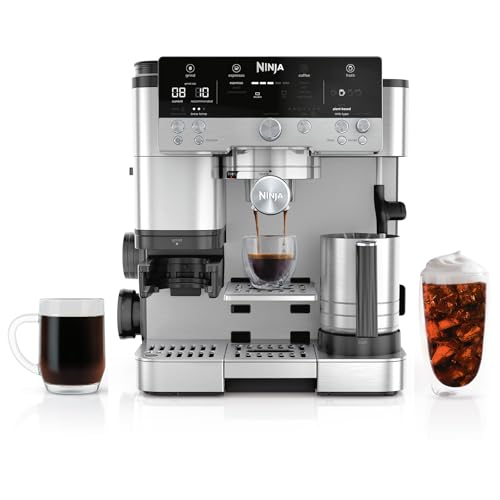
- Makes espresso, drip coffee, and cold brew
- Guided grinding, dosing, tamping, and brewing
- Hands-free frothing with multiple preset textures
Best For: Households wanting varied drinks with minimal guesswork
Best for Café Throughput
Commercial-Grade 2-Group Espresso Machine

- Two groups support simultaneous beverage preparation
- 1.6-gallon boiler for repeated service
- Rotary pump and stainless steel construction
Best For: Small cafés and restaurants handling higher drink volume
Best Entry-Level Barista Workflow

- Integrated grinder doses directly into the portafilter
- PID temperature regulation and pre-infusion
- Manual steam wand for microfoam and latte art
Best For: Home users learning hands-on espresso preparation
Classic Commercial Components
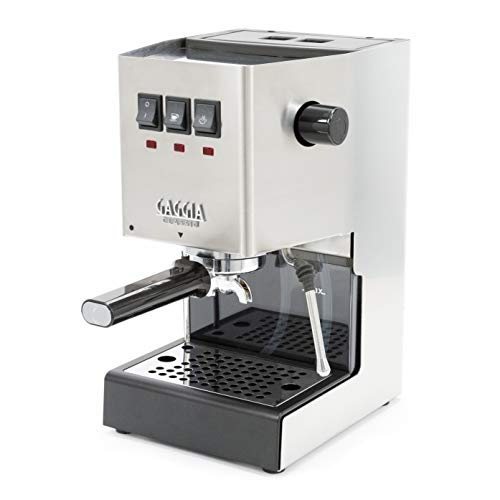
- 9-bar extraction with a 58mm commercial portafilter
- Steel housing and commercial steam wand
- Works with ground coffee or ESE pods
Best For: Home baristas seeking durable, serviceable espresso equipment
Built-In Grinder Convenience

- Integrated conical burr grinder with adjustable grind size
- PID temperature control and low-pressure pre-infusion
- Includes steam wand, portafilter, and milk pitcher
Best For: Home baristas wanting an all-in-one bean-to-cup workflow
Fast Dual-Boiler Workflow
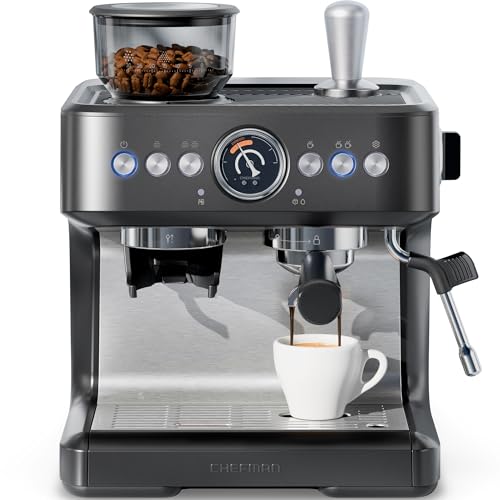
- Brew espresso and froth milk simultaneously
- 30-setting conical burr grinder
- 58mm portafilter and 3-liter removable tank
Best For: Busy households making multiple milk-based espresso drinks
Fast-Heating Favorite
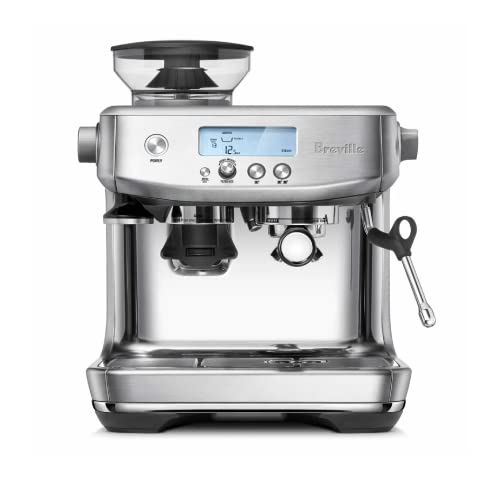
- Heats to extraction temperature in 3 seconds
- Built-in conical burr grinder with adjustable grinding
- PID control and LCD brewing guidance
Best For: Hands-on home baristas seeking speed and convenience
Dual-Boiler Specialist
Gevi Dual Boiler Espresso Machine
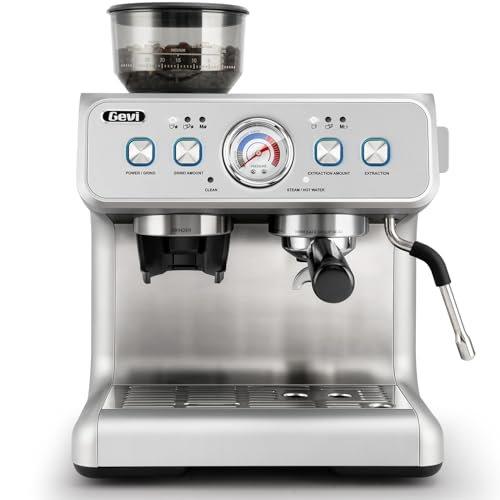
- Dual boilers for extraction and milk frothing
- 58mm portafilter and built-in burr grinder
- 31 grind levels with NTC and PID control
Best For: Home or workspace users wanting a more technical setup
Large-Tank Entertainer

- 3-liter removable water reservoir
- Integrated grinder with 30 settings
- 15-bar pump and 58mm portafilter
Best For: Households and hosts making multiple milk-based drinks
Premium Home Barista Setup – Breville Dynamic Duo
For serious home users seeking a commercial espresso machine experience, the Breville Dynamic Duo combines a dual-boiler espresso machine with a programmable conical burr grinder. Its temperature control, 58mm portafilter, and manual or volumetric shot options provide substantial control over extraction.
Best For: Home baristas who want simultaneous brewing and steaming with café-style control.
Pros:
- Dual boilers support simultaneous espresso extraction and milk steaming.
- PID temperature control, a heated group head, and low-pressure pre-infusion promote consistent extraction.
- Built-in grinder offers 60 grind settings and programmable dosing.
- Powerful steam supports silky microfoam for lattes and latte art.
Cons:
- The 20.41 kg weight and roughly 15-inch footprint require significant counter space.
- Semi-automatic operation rewards users willing to learn dosing and extraction adjustments.
The Dynamic Duo is a substantial investment, but its dual-boiler design and integrated grinder make it a strong choice for enthusiasts prioritizing workflow control and repeatable espresso.
Most Versatile All-in-One – Ninja Luxe Café Premier
The Ninja Luxe Café Premier is a commercial espresso machine alternative for users who want broad drink flexibility without managing every step manually. It combines espresso, drip coffee, and cold brew functions with a built-in grinder, guided dosing, assisted tamping, and hands-free milk frothing.
Best For: Households that want espresso drinks, drip coffee, and cold brew from one guided machine.
Pros:
- Three-in-one design supports espresso, drip coffee, and cold brew.
- Barista Assist Technology guides grinding, dosing, tamping, temperature, and pressure.
- Hands-free frothing includes steamed milk, thin froth, thick froth, and cold foam options.
- Built-in accessory storage helps conserve countertop space.
Cons:
- The 25-setting grinder offers fewer adjustments than the Breville Dynamic Duo’s grinder.
- Its fully automatic approach provides less hands-on control than a traditional semi-automatic machine.
Choose this model when convenience and variety matter more than traditional barista technique. It is especially practical for mixed households with different coffee preferences.
Best for Café Throughput – Commercial-Grade 2-Group Espresso Machine
This commercial espresso machine is built for cafés and restaurants that need higher-volume service. Its two-group layout allows simultaneous brewing, while the 1.6-gallon boiler and rotary pump are designed for continuous operation and stable heat performance.
Best For: Small cafés, restaurants, and other service settings with demanding drink volume.
Pros:
- Two groups can brew two different beverages at the same time.
- 1.6-gallon boiler supports repeated service during busy periods.
- Rotary pump is designed for continuous operation.
- Stainless steel construction offers durability and a straightforward commercial appearance.
Cons:
- Its approximately 20.5-inch depth and width require a dedicated commercial counter.
- Semi-automatic controls require staff to manage extraction time manually.
- It is designed for ground coffee and does not include an integrated grinder.
With two groups, a six-liter stated capacity, and a large boiler, this machine is better suited to a prepared café or restaurant workspace than a typical home kitchen.
Best Entry-Level Barista Workflow – Breville Barista Express
The Breville Barista Express offers a practical way to learn commercial espresso machine techniques at home while keeping the grinder and espresso maker in one unit. It provides on-demand grinding, adjustable grind size and dose, PID temperature regulation, and a manual steam wand for hands-on drink preparation.
Best For: Home users who want an approachable semi-automatic machine with an integrated grinder.
Pros:
- Integrated conical burr grinder doses freshly ground beans directly into the portafilter.
- PID temperature control supports precise espresso extraction.
- Low-pressure pre-infusion helps promote balanced flavor extraction.
- Manual steam wand can produce microfoam for cappuccinos, lattes, and latte art.
Cons:
- As a semi-automatic machine, it requires manual tamping, extraction management, and milk texturing.
- The 54mm portafilter is smaller than the 58mm portafilter supplied with the Dynamic Duo.
- It uses a single integrated system rather than separate brewing and grinding equipment.
The Barista Express is a balanced pick for developing espresso skills without buying a separate grinder. Its built-in tools simplify the setup while preserving meaningful manual control.
Classic Commercial Components – Gaggia Classic Evo Pro
The Gaggia Classic Evo Pro is a practical commercial espresso machine choice for home baristas who want durable construction and traditional semi-automatic control. Its steel housing, 58mm commercial portafilter, 9-bar extraction, and commercial steam wand support espresso preparation and milk-based drinks.
Best For: Home users who prioritize commercial-style components, serviceability, and manual espresso preparation.
Pros:
- Solid brushed stainless-steel housing with commercial components.
- Uses 9-bar espresso extraction and a 58mm commercial portafilter.
- Includes a commercial three-way solenoid valve and steam wand.
- Supports ground coffee and ESE pods, with a 2.1-liter water reservoir.
Cons:
- Semi-automatic operation requires hands-on dosing and extraction.
- Does not include an integrated grinder.
- Its 1,200-watt system is focused on home use rather than high-volume service.
The Gaggia is a strong fit when component quality and repair-friendly design matter more than built-in convenience. Pair it with a capable grinder for the best results.
Built-In Grinder Convenience – Breville Barista Express
The Breville Barista Express combines grinding and brewing in one semi-automatic commercial espresso machine-style setup. Its integrated conical burr grinder, PID temperature control, adjustable grind settings, and manual steam wand give home baristas control from whole bean to finished drink.
Best For: Beginners and intermediate home baristas who want an all-in-one machine for espresso, lattes, and cappuccinos.
Pros:
- Integrated conical burr grinder doses freshly ground coffee directly into the portafilter.
- PID temperature regulation supports precise espresso extraction.
- Low-pressure pre-infusion helps promote balanced flavor.
- Includes a 67-ounce water tank, 1/2-pound hopper, and milk pitcher.
Cons:
- The 54mm portafilter is smaller than the 58mm portafilters on the other listed machines.
- Manual grinding, tamping, steaming, and cleaning still require practice.
- Its integrated grinder offers convenience but cannot be separated from the machine.
The Barista Express is a convenient starting point for learning espresso because it covers grinding, extraction, and milk texturing in one appliance. It is especially appealing when counter space and workflow simplicity are priorities.
Fast Dual-Boiler Workflow – Chefman Crema Deluxe
The Chefman Crema Deluxe is a feature-rich commercial espresso machine-style option for users who want to brew and steam at the same time. Its dual boiler, built-in conical burr grinder, 30 grind settings, 58mm portafilter, and removable 3-liter reservoir support a flexible home café workflow.
Best For: Households that prepare milk-based drinks and want simultaneous espresso brewing and milk frothing.
Pros:
- Dual-boiler design allows brewing espresso and frothing milk simultaneously.
- Built-in conical burr grinder provides 30 grind settings.
- Offers customizable shot temperature and volume with single and double baskets.
- Large, removable 3-liter water reservoir simplifies refilling.
Cons:
- At 29.5 pounds, it is relatively heavy for a countertop machine.
- The many settings may require time to dial in.
- Its semi-automatic workflow still requires manual tamping and milk texturing.
The Crema Deluxe stands out for speed and flexibility, particularly when making several espresso-and-milk drinks in succession. Its grinder and dual boiler reduce separate equipment needs, while the larger footprint and weight should be considered.
Fast-Heating Favorite – Breville Barista Pro
The Breville Barista Pro is a strong commercial espresso machine-style option for home users who want integrated grinding, guided controls, and quick heat-up. Its ThermoJet system reaches extraction temperature in 3 seconds, while the manual steam wand supports textured milk for lattes and cappuccinos.
Best For: Home baristas who want fast, hands-on espresso preparation with a built-in grinder.
Pros:
- ThermoJet heating reaches extraction temperature in 3 seconds.
- Integrated conical burr grinder offers adjustable grinding and on-demand dosing.
- PID temperature control supports precise extraction within +/- 2°C.
- LCD interface provides grinding and extraction guidance.
Cons:
- Manual operation requires practice with dosing, tamping, and milk steaming.
- The 1/2-pound bean hopper and 67-ounce water tank may require refilling during heavier use.
With rapid heating, a built-in grinder, and useful on-screen guidance, the Barista Pro balances convenience with control. It is better suited to a hands-on home setup than a high-volume commercial environment.
Dual-Boiler Specialist – Gevi Dual Boiler Espresso Machine
The Gevi Dual Boiler is a commercial espresso machine-style choice for home or workspace brewing, pairing a 58mm portafilter with a built-in burr grinder and dual-boiler design. NTC and PID controls regulate extraction and milk-frothing temperatures, while 31 grind levels help refine the brew.
Best For: Home baristas who want temperature control, a commercial-size portafilter, and flexibility for espresso drinks.
Pros:
- Dual-boiler design supports separate coffee extraction and milk frothing functions.
- 58mm portafilter offers a commercial-style brewing format.
- Built-in burr grinder provides adjustable grinding with up to 31 levels.
- Includes a steam wand, detachable tank and drip tray, and multiple filters.
Cons:
- Semi-automatic operation involves more manual preparation than a fully automatic machine.
- The listed dimensions are substantial, so counter space should be checked before buying.
The Gevi stands out for its dual-boiler configuration, temperature management, and 58mm portafilter. It offers a more equipment-focused setup for users willing to spend time learning espresso technique.
Large-Tank Entertainer – Chefman Crema Supreme
The Chefman Crema Supreme is a practical commercial espresso machine-style option for households that serve several drinks, thanks to its 3-liter removable water tank and integrated grinder. Its 15-bar pump, pressure gauge, 30 grind settings, and 58mm portafilter give users control over espresso and milk-based beverages.
Best For: Families, brunch hosts, and home users who value a large reservoir and straightforward semi-automatic brewing.
Pros:
- Large 3-liter removable water tank reduces frequent refilling.
- Integrated conical burr grinder offers 30 customizable grind settings.
- 15-bar pump, pressure gauge, and adjustable shot temperature and volume support customization.
- Includes a milk steamer, pitcher, tamper, funnel, and cleaning tools.
Cons:
- Semi-automatic brewing still requires manual grinding, tamping, and steaming.
- At 21.8 pounds, it is relatively heavy to move regularly.
The Crema Supreme emphasizes capacity and convenience without removing the hands-on aspects of espresso making. Its large tank and included accessories make it especially useful when preparing multiple drinks in succession.
How We Picked the Best Commercial Espresso Machine Options
We focused on the features that most directly affect espresso quality and daily workflow: boiler design, pump type, portafilter size, grinder integration, milk-steaming capability, controls, build materials, and ease of cleaning. We also considered the differences between true commercial-style equipment and prosumer machines designed primarily for home use.
Because the selections serve different buyers, the list includes compact semi-automatic machines, integrated grinder models, dual-boiler systems, and a full-size two-group commercial unit. Product claims should be confirmed against the manufacturer’s current specifications, especially boiler capacity, included accessories, electrical requirements, and warranty coverage.
Quick Comparison
| Type | Best For | Main Advantage | Trade-Off |
|---|---|---|---|
| Dual-boiler machine | Frequent espresso and milk drinks | Brew and steam at the same time | Higher cost and larger footprint |
| Integrated grinder machine | Home users seeking convenience | Fewer separate appliances | Less grinder-upgrade flexibility |
| Semi-automatic machine | Hands-on espresso preparation | Greater control over dosing and extraction | Requires a separate grinder in some setups |
| Two-group commercial machine | Small cafés and high volume | Multiple drinks can be prepared efficiently | Needs more space, power, plumbing, and maintenance |
Key Buying Factors for a Commercial Espresso Machine
Boiler Configuration and Steam Capacity
A single boiler can suit occasional espresso and milk drinks, but a heat-exchanger or dual-boiler design is better for back-to-back service. Check recovery time and steam performance rather than relying on pressure claims alone.
Grinder and Dosing Control
Fresh, accurately dosed coffee is essential. An integrated burr grinder saves space and simplifies setup, while a separate grinder usually provides more upgrade flexibility and easier replacement.
Workflow and Controls
Look for stable temperature control, a practical portafilter, accessible water and drip trays, and controls that match your experience. Assisted tamping, programmable dosing, and guided settings can reduce the learning curve.
Installation and Maintenance
Measure the machine, allow room above it for filling, and verify voltage and water requirements. Regular backflushing, descaling when appropriate, grinder cleaning, and steam-wand purging are essential for performance and hygiene.
Who Should Buy Which Commercial Espresso Machine?
Choose an integrated grinder model if you want an all-in-one home setup with fewer accessories. Choose a dual-boiler machine if you regularly make several cappuccinos or lattes and want better brew-and-steam concurrency. Choose a semi-automatic model if you enjoy dialing in grind size, dose, and extraction manually. Choose the two-group commercial machine only if your volume, available space, electrical setup, and maintenance routine justify true commercial capacity.
For most households, prioritize temperature stability, grinder quality, serviceability, and ease of use over maximum bar-pressure numbers or oversized boiler claims.