The best energy-efficient wine coolers help protect wine at stable temperatures without using more electricity than necessary. This lineup includes compact countertop models, slim wine fridges, and larger dual-zone cellars for varied collections.
Use the comparison and buying advice below to match cooling technology, bottle capacity, temperature range, and installation style with your space and serving habits.
Best 10 Energy Efficient Wine Coolers Picks for 2026
Efficient 24-Bottle Storage
Wine Enthusiast Compressor Cooler

- 24-bottle single-zone capacity
- 41–64°F digital temperature control
- Upright storage for four open bottles
Best For: Medium-sized wine collections needing compressor cooling
Compact Energy Saver
BLACK+DECKER 12-Bottle Chiller

- Quiet thermoelectric cooling
- 12-bottle capacity with removable racks
- Mirrored UV-blocking door
Best For: Small spaces and casual wine storage
Dual-Zone Entertaining
Honeywell Wine and Beverage Cooler

- Dual-zone wine and can storage
- 40–65°F digital temperature range
- 180 kWh annual energy consumption listed
Best For: Entertaining spaces needing wine and beverage capacity
Low-Consumption Compressor Pick
Ivation 12-Bottle Compressor Cooler
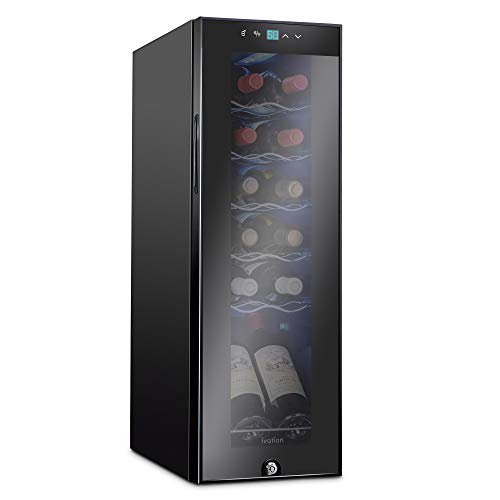
- 115.17 kWh annual energy use listed
- Stable 41–64°F compressor cooling
- UV glass and key lock included
Best For: Small collections prioritizing energy use and temperature stability
Best Compact Pick
6-Bottle Countertop Wine Cooler

- Compact design stores six Bordeaux bottles
- Quiet thermoelectric cooling with digital controls
- Freestanding countertop use only
Best For: Small collections and tight countertop spaces
Best Larger-Capacity Pick
30-Bottle Dual-Zone Wine Fridge

- Stores up to 30 bottles with dual-zone control
- Front vent supports built-in or freestanding use
- Listed annual energy consumption is 128 kWh
Best For: Larger collections and mixed red-and-white storage
Best Slim Storage Pick
12-Bottle Stainless Steel Wine Fridge

- Slim 17.7-inch-wide design holds 12 bottles
- 41–64°F adjustable single-zone temperature range
- Listed annual energy consumption is 100 kWh
Best For: Narrow spaces needing moderate wine storage
Compact Quiet Pick
KingChii 6-Bottle Thermoelectric Wine Cooler
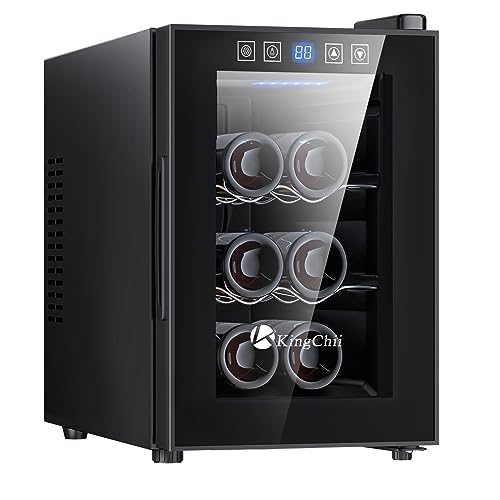
- Six-bottle, 18-liter compact design
- Below-38 dB quiet operation
- UV-resistant double-layer glass
Best For: Small collections, apartments, and offices
Measured Energy Choice
Ivation 18-Bottle Compressor Wine Cooler
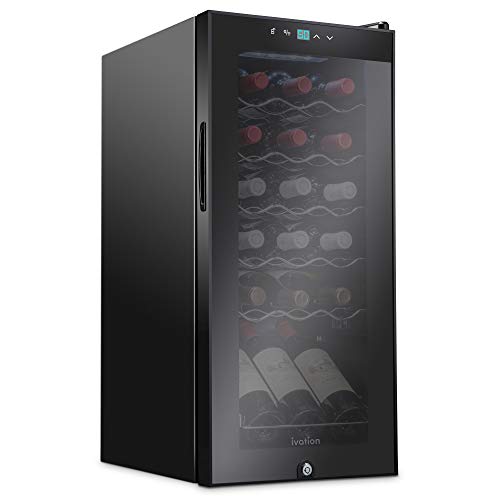
- 18-bottle, 1.8-cubic-foot capacity
- 41°F–64°F compressor temperature range
- 120.03 kWh annual energy consumption listed
Best For: Medium collections and energy-conscious buyers
Versatile Capacity Pick
ROVSUN 18-Bottle Compressor Wine Fridge
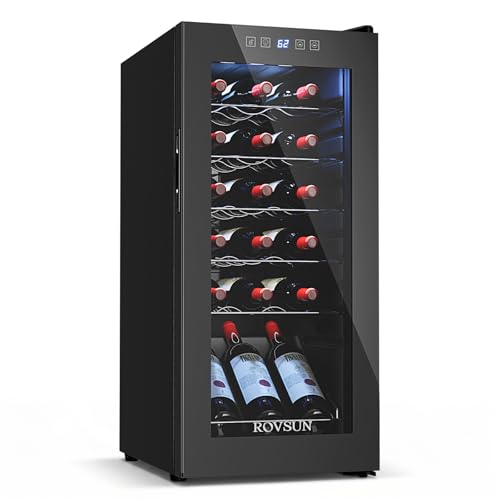
- 18-bottle, 1.8-cubic-foot capacity
- 41°F–64°F adjustable cooling range
- Removable shelf for wine and beverage storage
Best For: Homes, apartments, and flexible beverage storage
Efficient 24-Bottle Storage – Wine Enthusiast Compressor Cooler
For shoppers comparing energy efficient wine coolers, this Wine Enthusiast model combines compressor cooling with a 24-bottle capacity in a relatively compact freestanding design. Its 41–64°F range, digital controls, and upright storage make it practical for medium-sized collections.
Best For: Wine collectors who want compressor cooling and room for up to 24 Bordeaux bottles.
Pros:
- Compressor technology is designed for consistent cooling across a wider range of household temperatures.
- Holds up to 24 bottles and includes an upright holder for up to four open bottles.
- Front touchscreen and readable LED display simplify temperature adjustments.
- Includes a one-year parts-and-labor warranty and three-year sealed-system parts coverage.
Cons:
- Manual defrost requires more maintenance than an automatic system.
- Its 47-pound, 30.5-inch-tall design may be larger than needed for small collections.
This is a strong fit when capacity and temperature consistency matter more than the smallest possible footprint. The single-zone layout is straightforward, but it does not provide separate settings for reds and whites.
Compact Energy Saver – BLACK+DECKER 12-Bottle Chiller
This BLACK+DECKER wine chiller is a compact option among energy efficient wine coolers, using quiet thermoelectric cooling and consuming a listed 155 kWh per year. Its 12-bottle capacity, mirrored door, and 46–66°F range suit smaller collections.
Best For: Apartment dwellers and casual wine drinkers who need compact, quiet storage for up to 12 bottles.
Pros:
- Thermoelectric cooling is described as energy-efficient and quiet.
- Five removable chrome racks provide flexible bottle storage.
- Mirrored door helps block potentially damaging UV light.
- Interior light and digital temperature control improve everyday usability.
Cons:
- The 46–66°F range is narrower and warmer at the low end than some compressor models.
- Its 12-bottle capacity may not suit growing collections.
- Thermoelectric cooling can be less suitable for homes with larger temperature swings.
With a small footprint and 28.3-pound weight, this model is easy to place in a kitchen, apartment, or entertainment area. Choose it for quiet convenience and modest capacity rather than advanced temperature versatility.
Dual-Zone Entertaining – Honeywell Wine and Beverage Cooler
For households seeking energy efficient wine coolers with added beverage storage, this Honeywell freestanding unit pairs compressor cooling with a dual-zone side-by-side layout. It offers a 40–65°F setting range, wooden pull-out racks, and a listed annual energy consumption of 180 kWh.
Best For: Entertainers who want separate wine and beverage sections in one larger freestanding appliance.
Pros:
- Dual-zone design accommodates wine and cans side by side.
- Compressor cooling and a 40–65°F range support reds, whites, and sparkling wine.
- Double-paned UV-resistant glass improves insulation and shields wine from UV light.
- Wooden pull-out shelving and soft LED lighting make bottles and cans easier to access.
Cons:
- At 95 pounds and nearly 23.5 inches wide, it requires substantial floor space.
- The two-door configuration costs more space and complexity than a compact single-zone cooler.
- The supplied information lists a one-year warranty but no longer coverage.
This model makes the most sense when beverage versatility is a priority. Its larger footprint and higher capacity are well suited to entertaining areas, while adjustable legs help with leveling on uneven surfaces.
Low-Consumption Compressor Pick – Ivation 12-Bottle Compressor Cooler
This Ivation cooler stands out among energy efficient wine coolers with listed annual energy consumption of 115.17 kWh and compressor-based temperature stability. Its 12-bottle capacity, 41–64°F range, UV-resistant glass, and lock make it a practical compact cellar.
Best For: Smaller collections that need stable compressor cooling, low listed energy use, and added security.
Pros:
- Listed annual energy consumption is 115.17 kWh.
- Compressor cooling and a built-in fan help maintain consistent temperatures.
- Double-paned UV-resistant glass protects the collection while helping insulate the cabinet.
- Touch controls, LED lighting, removable racks, and a key lock add convenience.
Cons:
- Its narrow 9.92-inch width may limit compatibility with some larger bottle shapes.
- The single-zone design cannot set separate temperatures for different wine styles.
- Capacity is limited to 12 bottles.
This is a compelling choice for buyers who want compressor performance without moving up to a large cabinet. The compact dimensions and low listed energy consumption are especially useful for small kitchens, apartments, or dedicated bar areas.
Best Compact Pick – 6-Bottle Countertop Wine Cooler
If you want energy efficient wine coolers for a small kitchen, bedroom, bar, or office, this 6-bottle countertop model is a space-conscious choice. Its thermoelectric cooling system, digital temperature controls, and compact footprint make it suited to modest collections.
Best For: Small collections and countertop storage where quiet, compact operation matters.
Pros:
- Stores up to six Bordeaux bottles in a compact design.
- Digital touchscreen and LED display provide adjustable temperature control.
- Thermoelectric cooling operates quietly and meets stated U.S. energy standards.
- Automatic defrost and three shelves help keep bottles organized.
Cons:
- Freestanding use only; it is not suitable for built-in or undercounter installation.
- Requires clearance around the sides, back, and top for ventilation.
- Best performance depends on an ambient temperature below 75°F, with 60–65°F recommended for the lowest setting.
This is a practical entry-level option when capacity and installation flexibility are less important than a small, quiet, efficient wine cooler. Measure your space carefully and allow the recommended ventilation clearance.
Best Larger-Capacity Pick – 30-Bottle Dual-Zone Wine Fridge
For shoppers comparing energy efficient wine coolers with more storage, this 30-bottle BODEGA model combines dual-zone temperature control with compressor cooling. Its front vent supports either freestanding or built-in installation, while the listed annual energy consumption is 128 kWh per year.
Best For: Larger collections needing separate temperature zones and flexible installation.
Pros:
- Holds up to 30 standard 750 ml bottles in a 3.2-cubic-foot cabinet.
- Dual-zone controls allow separate temperature settings, adjustable in 1°F increments.
- Front ventilation supports freestanding, built-in, or undercounter placement.
- Double-pane UV-protected glass, removable wood shelves, and memory function support convenient storage.
Cons:
- Its larger cabinet requires substantially more floor or cabinet space than compact models.
- Compressor and fan cooling may be less inherently quiet than a small thermoelectric unit, although the product is rated as low as 42 dB.
- Temperature details in the supplied specifications vary, so confirm the desired range before purchase.
This model is a strong fit when bottle capacity, dual-zone storage, and installation flexibility outweigh the need for the smallest possible footprint. Its stated energy use provides a useful comparison point for a 30-bottle compressor wine fridge.
Best Slim Storage Pick – 12-Bottle Stainless Steel Wine Fridge
This Nutrichef model is worth considering among energy efficient wine coolers when you need a narrow cabinet with room for 12 bottles. It combines compressor cooling, adjustable controls, quiet operation, and listed annual energy consumption of 100 kWh per year in a 17.7-inch-wide design.
Best For: Narrow floor, table, or countertop spaces that need moderate bottle capacity.
Pros:
- Stores up to 12 standard-sized wine bottles in a slim freestanding design.
- Adjustable 41–64°F temperature range with digital display and Fahrenheit/Celsius selection.
- Compressor cooling, inverter technology, and stated ultra-quiet operation support everyday use.
- Child safety auto-lock, LED lighting, and a one-year warranty add convenience.
Cons:
- The supplied specifications list an Energy Star 1 Star rating, so it may be less efficient than higher-rated alternatives.
- It uses a single temperature section rather than dual-zone storage.
- The 12-bottle capacity is more limited than larger wine refrigerators.
With a relatively narrow profile and 100 kWh-per-year energy figure, this cooler offers a practical middle ground between a tiny countertop unit and a full-size wine fridge. Choose it when slim dimensions and single-zone storage fit your needs.
Compact Quiet Pick – KingChii 6-Bottle Thermoelectric Wine Cooler
For shoppers seeking energy efficient wine coolers for a small collection, the KingChii offers six-bottle storage in a compact freestanding design. Its thermoelectric cooling system, insulated double-layer glass, and quiet operation suit kitchens, offices, and other living spaces.
Best For: Small collections, apartments, offices, and buyers who prioritize quiet operation.
Pros:
- Compact 18-liter capacity holds up to six bottles.
- Thermoelectric cooling supports a stable storage environment.
- Double-layer tempered glass helps insulate bottles and block UV radiation.
- Operates below 38 dB and includes LED lighting, adjustable legs, and temperature memory.
Cons:
- Six-bottle capacity is limited for growing collections.
- The notes do not provide a specific annual energy-consumption figure.
This KingChii is a practical choice when space and low noise matter more than maximum capacity. Its compact footprint and convenience features make it well suited to everyday home or office use.
Measured Energy Choice – Ivation 18-Bottle Compressor Wine Cooler
The Ivation is a strong option among energy efficient wine coolers for buyers who want a larger single-zone cellar with documented power use. Its compressor cooling reaches 41°F to 64°F, while the insulated glass door, removable racks, and digital controls support flexible storage.
Best For: Medium-size collections and shoppers who want compressor cooling with a stated 120.03 kWh annual energy consumption.
Pros:
- Stores up to 18 standard bottles in a 1.8-cubic-foot interior.
- Compressor system maintains a 41°F to 64°F range, including temperatures for sparkling wine.
- Uses 120.03 kWh per year and includes an inverter.
- Removable racks, touch controls, a lock, UV-resistant double-pane glass, and LED lighting add practicality.
Cons:
- Its 43-pound, 30.31-inch-tall design requires more floor space than a compact cooler.
- Single-zone storage does not provide separate temperature settings for different wine types.
Choose the Ivation if capacity and temperature range are priorities but energy use still matters. The published consumption figure makes it easier to compare with other energy efficient wine coolers.
Versatile Capacity Pick – ROVSUN 18-Bottle Compressor Wine Fridge
For households comparing energy efficient wine coolers with flexible beverage storage, the ROVSUN combines an 18-bottle capacity with compressor refrigeration and a 41°F to 64°F range. Its removable metal shelf, touch controls, and double-layer glass door make it adaptable for wine, Champagne, and beer.
Best For: Homes, apartments, dorms, or offices needing larger storage and flexible interior organization.
Pros:
- Large 1.8-cubic-foot interior accommodates up to 18 standard-size bottles.
- Compressor cooling provides a 41°F to 64°F adjustable range.
- Double-layer glass, consistent air circulation, and a quiet compressor support stable storage.
- Removable shelving, exterior touch controls, LED lighting, and a key lock improve usability.
Cons:
- Capacity may be reduced when storing larger or unusually shaped bottles.
- The supplied details do not include a specific annual energy-consumption figure.
The ROVSUN stands out for buyers who want one cooler for wine and other beverages. Although its notes do not quantify yearly power use, its compressor design and practical controls offer a capable larger-capacity setup.
How We Picked the Best Energy Efficient Wine Coolers
We focused on models that balance dependable temperature control with practical energy-conscious design. Our comparison considers cooling technology, stated capacity, temperature adjustability, cabinet layout, noise expectations, door construction, and features such as locks, interior lighting, and dual-zone storage.
Compressor models generally provide stronger, more consistent cooling, especially in warmer rooms, while thermoelectric units can be quieter and well suited to smaller collections. Because real-world electricity use varies with room temperature, ventilation, loading, and thermostat settings, energy efficiency should be evaluated alongside performance rather than by capacity alone.
Quick Comparison
| Best For | Recommended Type | What to Look For |
|---|---|---|
| Small spaces | 6- or 12-bottle countertop or slim cooler | Compact dimensions, quiet operation, front ventilation |
| Mixed wine collections | Dual-zone compressor cooler | Independent temperature controls and usable zone sizes |
| Everyday red wine storage | 12- to 24-bottle compressor model | Stable cooling, adjustable racks, digital controls |
| Premium or collectible bottles | Locked freestanding wine refrigerator | Temperature stability, UV protection, secure door, low vibration |
Key Buying Factors for Energy-Efficient Wine Coolers
Cooling Technology
Thermoelectric coolers are often compact and quiet, making them suitable for bedrooms, offices, or lightly used collections. Compressor wine refrigerators typically cool more effectively in warm environments and offer better capacity for long-term storage, though they may produce occasional operating noise and use more power during heavy cooling cycles.
Capacity and Bottle Fit
Advertised capacity usually assumes standard Bordeaux-style bottles. Larger Burgundy bottles, Champagne bottles, and irregular shapes can reduce usable space. Choose extra capacity if you regularly store sparkling wine or want room for future purchases. Removable or adjustable shelves make the stated capacity more flexible.
Single-Zone Versus Dual-Zone
A single-zone cooler is simpler and can be more efficient when all bottles need similar conditions. Dual-zone models are useful for keeping whites and sparkling wines cooler than reds, but they require more cabinet space and may consume more energy. Check the minimum and maximum temperature ranges for both zones before buying.
Placement, Ventilation, and Controls
Confirm whether the unit is freestanding or designed for built-in installation. Freestanding models need clearance around ventilation areas, while restricted airflow can increase energy use and shorten compressor life. Digital controls, interior LED lighting, a glass door, and a lock add convenience, but the core priorities remain stable temperature and adequate ventilation.
Who Should Buy Which Energy Efficient Wine Coolers?
Choose a compact 6-bottle or 12-bottle thermoelectric cooler if you have limited space and want quiet storage for a small rotation. Select a 12- to 18-bottle compressor unit for a growing collection or a warmer room. A 24-bottle model suits regular wine drinkers who want reserve capacity without moving to a large cellar.
For households serving reds, whites, and Champagne at different temperatures, a dual-zone model is the most practical choice. If security matters, prioritize a lockable door. For lower operating costs, select the smallest suitable capacity, keep the cooler away from heat sources, maintain ventilation clearance, and avoid setting the temperature colder than your wine requires.